
Botox for wrinkles – how the treatment works, results, and what you should know
Written by: Aestheticare
Botox is an injectable treatment for people who want to reduce the visibility of expression wrinkles and fine lines on the face. By temporarily reducing activity in selected facial muscles, the treatment may help create a smoother, more relaxed appearance. Here we explain how Botox works, which areas can be treated, and what to expect before and after treatment.
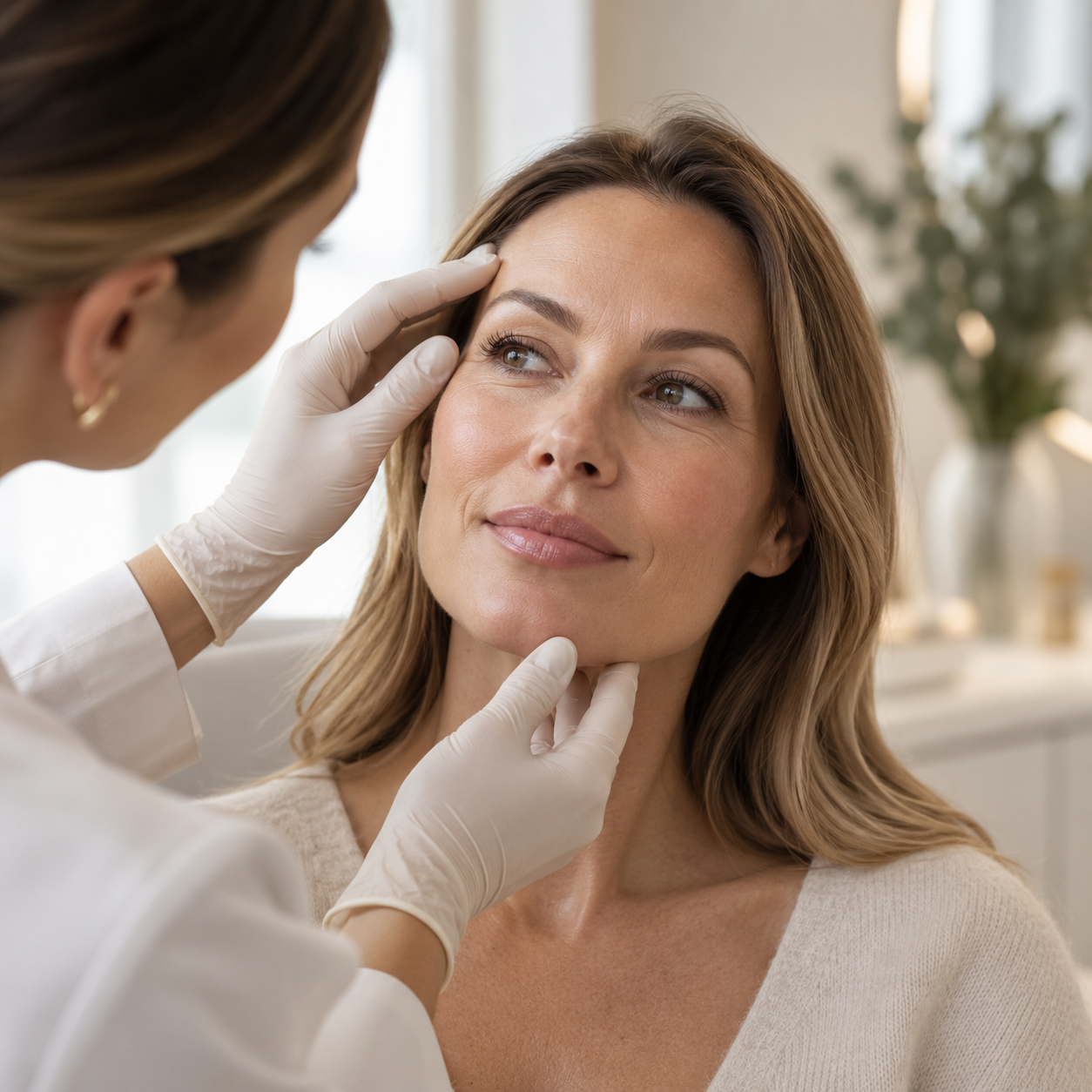
When facial expressions begin to leave their mark
Changes in the skin with age are entirely natural. Over time, lines on the forehead, between the eyebrows, and around the eyes may become more pronounced. This is partly because the skin gradually loses elasticity while the facial muscles continue to work every time we smile, laugh, or frown.
For some people, these lines are visible even when the face is at rest.
Botox may be an option for people who want to reduce the appearance of such wrinkles without surgery. The aim is to tailor treatment to the anatomy and expressions of the face, as well as individual circumstances.
What is Botox?
Botox is a pharmaceutical brand that contains botulinum toxin type A. In aesthetic treatment, botulinum toxin is used to temporarily reduce activity in specific facial muscles.
When we make facial expressions, the muscles contract and the skin above them folds. Over time, these repeated movements may contribute to wrinkles becoming more visible.
Botulinum toxin works by temporarily blocking the release of acetylcholine, a neurotransmitter needed for muscles to contract.
When muscle activity decreases, the skin above may become smoother and dynamic wrinkles may appear less prominent.
Unlike fillers, Botox does not add volume. Instead, the treatment affects muscle activity. It also does not directly improve skin quality in the same way that some skin-rejuvenating treatments are intended to.
What can Botox help with?
Botox is primarily used to treat dynamic wrinkles, meaning lines that appear or become more pronounced when the facial muscles are active.
Treatment may be considered for, for example:
- Forehead wrinkles: Horizontal lines that become visible when you raise your eyebrows.
- Frown lines: Vertical lines between the eyebrows that may create a tense or concerned expression (glabellar lines).
- Crow’s feet: Fine lines at the outer corners of the eyes that appear when you smile or laugh.
Botulinum toxin is also used in other aesthetic and medical treatment areas, but suitability, medication indication, and treatment method must be assessed individually.
It is important to distinguish between dynamic wrinkles and static wrinkles, which are visible even when the face is at rest. Botox primarily affects wrinkles caused by muscle activity. Deeper lines may therefore remain after treatment.
How a Botox treatment is performed
A Botox treatment is usually relatively brief and normally does not require an extended recovery period. However, a thorough medical assessment is important before treatment is performed.
1. Consultation
We begin by discussing your wishes, expectations, and any previous treatments.
We also review your health, medication use, and facial muscle activity to assess whether Botox is suitable for you.
For a first aesthetic injection treatment, Swedish law requires a reflection period of at least two days after you have received the prescribed information.
2. Preparation
The treatment area is carefully cleaned. The muscles to be treated and suitable injection points are then identified.
Anesthetic is usually not needed because the injections are given with a very fine needle.
3. Treatment
Small amounts of botulinum toxin are injected into selected muscles.
The injections themselves often take around 10–20 minutes, depending on how many areas are treated.
4. Aftercare
After treatment, you will receive individual recommendations about what to keep in mind over the following hours and days.
Most people can return to their usual daily activities immediately after treatment.
When will results appear, and how long does Botox last?
Botox does not produce an immediate result. The effect develops gradually as the medicine begins to affect muscle activity.
First few days: Some people begin to notice a change after about 2–5 days.
After about two weeks: The effect has usually developed clearly and the result can be assessed.
After about 3–4 months: The effect has often gradually started to wear off, and muscle activity returns progressively.
How long the result lasts varies between people and is influenced, among other things, by the treatment area, dosage, and individual muscle activity.
Botox is not a permanent treatment. If you want to maintain the effect, repeat treatments may be considered following an individual assessment. Treatments should not be performed more frequently than is medically appropriate and consistent with the medicine’s recommendations.
After treatment – what should you keep in mind?
Small, temporary reactions may occur at the injection sites after Botox.
Common reactions include:
- Mild redness or swelling.
- Tenderness at the injection points.
- Small bruises.
- Temporary headache.
These symptoms are usually temporary.
Always follow the aftercare advice provided by your practitioner. For example, you may be advised to avoid rubbing or massaging the treatment area immediately after the injections.
In some cases, Botox may also cause unwanted muscle weakness, asymmetry, or temporary drooping of an eyelid or eyebrow. More serious complications are uncommon but possible.
Contact the clinic if you have unexpected or persistent symptoms. If you have difficulty breathing, swallowing, or speaking, seek emergency medical care immediately.
Who may not be suitable for Botox?
Botox is not suitable for everyone. An individual medical assessment is therefore always carried out before treatment.
Treatment should be avoided or may need to be postponed in situations such as:
- Pregnancy or breastfeeding, as sufficient safety data are lacking and treatment is generally not recommended.
- An active infection in the planned injection area.
- Certain neuromuscular conditions, such as myasthenia gravis.
- Known hypersensitivity to botulinum toxin or any ingredient in the medicine.
- Use of certain medicines that may affect neuromuscular function.
In Sweden, you must be at least 18 years old to undergo an aesthetic injection treatment.
During the consultation, we review any contraindications, risks, and alternative treatments.
Frequently asked questions about Botox
Does Botox treatment hurt?
Most people experience only a brief sting or mild discomfort when the injections are given. The treatment is performed using fine needles and is usually quick.
Will my face look stiff or unnatural?
Botox reduces muscle activity in the treated area and can therefore affect facial expressions. How the result looks depends, among other things, on dosage, injection placement, and individual circumstances.
During the consultation, we discuss what result may be realistic given your facial expressions and wishes.
How often do you need Botox?
The effect often lasts around 3–4 months, but varies between people. Whether and when another treatment is appropriate is determined individually.
What is the difference between Botox and fillers?
Botox temporarily reduces muscle activity and is primarily used for expression wrinkles.
Fillers, by contrast, are used to add volume or alter contours in the tissue. The treatments have different uses and risk profiles.
Can Botox be combined with other skin treatments?
In some cases, Botox can be combined with, for example, microneedling or other skin-improving treatments.
Which combinations are suitable and how treatments should be scheduled depend on the condition of the skin, treatment areas, and individual circumstances.
Summary – is Botox the right treatment for you?
Botox may be an option for people who want to reduce the visibility of expression wrinkles on the forehead, between the eyebrows, or around the eyes, for example. The treatment has a temporary effect and needs to be tailored to facial anatomy, muscle activity, and your individual goals.
At Aestheticare, we begin with a consultation to discuss your wishes, medical circumstances, and which treatment options may be suitable for you.